Driver Monitor System - DMS
Industry Positioning
1, DMS (Driver Monitoring System) functions as a relatively independent yet coupled third-party system between the machine-driven system and the human driver in L2 to L4 autonomous vehicles.
2, As autonomous driving technology continues to advance, the importance of DMS will further increase. The system will gradually evolve from monitoring to involvement in control and decision-making.
l Phase 1.0: Monitor unsafe states of drivers and passengers, improve post-collision safety performance, and work toward a vision of zero casualties.
l Phase 2.0: Integrate DMS with HMI, ADAS, and cockpit systems to enable personalized and human-like driving experiences.
l Phase 3.0: Combine occupant status monitoring with cloud-based platforms to enable customized service scenarios.
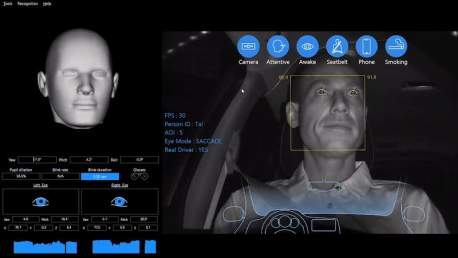
DMS Vision
Vision: Zero casualties
Vision Breakdown:
In-vehicle safety: Prevent hazards through alerts based on sensory detection (e.g., warning drivers to avoid dangerous behavior).
Detect and predict risks: e.g., remind caregivers not to leave infants or children unattended in car seats.
Level 1: Inattention detection
l Distraction
l Drowsiness / sleepiness
l Nodding off
l Passenger facial monitoring
Level 2: Physical condition / forgetfulness detection
l Vital signs (posture)
l Detection of forgotten infant seats (connected to RF sensors)
Level 3: Preventing dangerous driving and collisions
l Emotion recognition (happiness, anger, sadness, fear)
l Physical condition monitoring (linked to airbag systems)
l Front seat belt monitoring
l E-Call integration (connected to driving recorder)
Level 4: Safety and comfort of all occupants
l Recognition of passenger emotions, movements, and intentions
l Early detection of abnormal conditions
l Passenger attribute identification (gender, age, etc.)
l Detection of cabin contaminants and left-behind items
DMS Challenges
1. Standards are not yet mature-individual variability (“every face is unique”) poses challenges to standardization.
2. Data privacy regulations specific to DMS have not been established.
3. Most manufacturers treat DMS as a subsystem of ADAS or autonomous driving systems rather than integrating it as an equally critical component for collaborative control.
4. The industry chain remains unclear, and there is a lack of quantifiable demand analysis.
5. The industry has yet to develop reliable models for accurately assessing the physiological and psychological states of drivers and passengers, limiting the system’s decision-making accuracy.
